




















May 07,2026
Do latex gloves make your hands itchy every time you wear them? It seems that households these days are quietly switching to nitrile gloves.
Ever bought a pair of latex gloves on a whim at the supermarket, only to find they just don’t quite cut it? They’re tolerable in winter, but in summer, prolonged wear can make your hands stuffy and smelly—and some people even develop itchy little red rashes after taking them off!
Over the past two years, more and more households have switched from latex gloves to nitrile gloves. We generally know that nitrile gloves are superior, but we’re still unclear about exactly what makes them better and how they outperform latex gloves. Today, we’ll clearly explain the key differences between latex and nitrile gloves—and while we’re at it, we’ll also discuss why. Add a review for Titanfine nitrile gloves has quietly become the “new household favorite” for many families.

I. How many “pitfalls” of latex gloves have you fallen into?
Let’s start by talking about the latex gloves we’ve been using for decades—they’re inexpensive, pleasantly soft, and almost every household has a pair or two. They certainly have clear advantages, but their one major drawback is that you’re bound to step on one after just one use:
1. There is a certain risk of sensitization.
Many people experience itching, pain, and small rashes on their hands after prolonged use of latex gloves—not because their skin is overly sensitive, but because of the natural rubber proteins contained in the latex. This is especially true for individuals with allergies, families with young children, or households that keep pets; frequent exposure can easily exacerbate skin sensitivity, and in some cases, even a single use can damage the skin barrier.
2. Fragile and harboring hidden flaws
Latex gloves may look sturdy, but they’re actually vulnerable to oil, heat, and chemical cleaners. If dishwashing gloves get coated with dish soap, they’ll quickly become sticky and crack after just a few uses. In the hot summer kitchen, the inside of the gloves traps sweat, and when you take them off, they give off a sour, musty odor—something the editor can attest to, as the smell simply won’t wash away.
3. Contact with food is completely unsafe.
In the past, few people paid much attention to using latex gloves for kneading dough or tossing cold dishes. However, under the new food-contact materials standard GB 4806.11-2023, many common latex gloves still do not meet food-contact-grade requirements. When in contact with oily substances or high-temperature foods, they may release harmful substances—a potential health hazard that is truly alarming when you think about it.
II. The Advantages of Nitrile Gloves Hit All the Household Pain Points
The trend toward nitrile gloves is not a passing fad—it genuinely addresses issues that latex gloves cannot. Compared with latex, its advantages are almost self-evident:
1. Zero allergens—safe for even sensitive skin
Made entirely of nitrile, these gloves contain no natural rubber proteins, fundamentally eliminating the allergenic risk associated with latex gloves. Whether you have a sensitive skin type or are in direct contact with food ingredients that may come into your mouth, you can wear them without worrying about itching or redness—making them an ideal choice for those with sensitive skin.
2. Durable and resilient—the “all-round champion” of household chores
Nitrile material is inherently oil-, acid-, and alkali-resistant, so it easily withstands dish soap, grease, and disinfectants. Whether you’re scrubbing heavily greasy pots and pans, wiping away stubborn stains, or even handling raw meat and seafood directly, nitrile gloves hold up—unlike latex gloves, they don’t fall apart at the first touch of oil. They stay durable even after several uses, making them an outstanding value.
3. Food-grade safety—feel more confident when in contact with food.
Nitrile gloves that meet national food-contact standards are safe for direct contact with food. When handling foods that are eaten directly, wearing such gloves not only protects against dirt and oil but also eliminates any concern about the leaching of harmful substances—after all, food safety is of paramount importance.
4. Breathable and sweat-wicking—comfortable to wear even in summer.
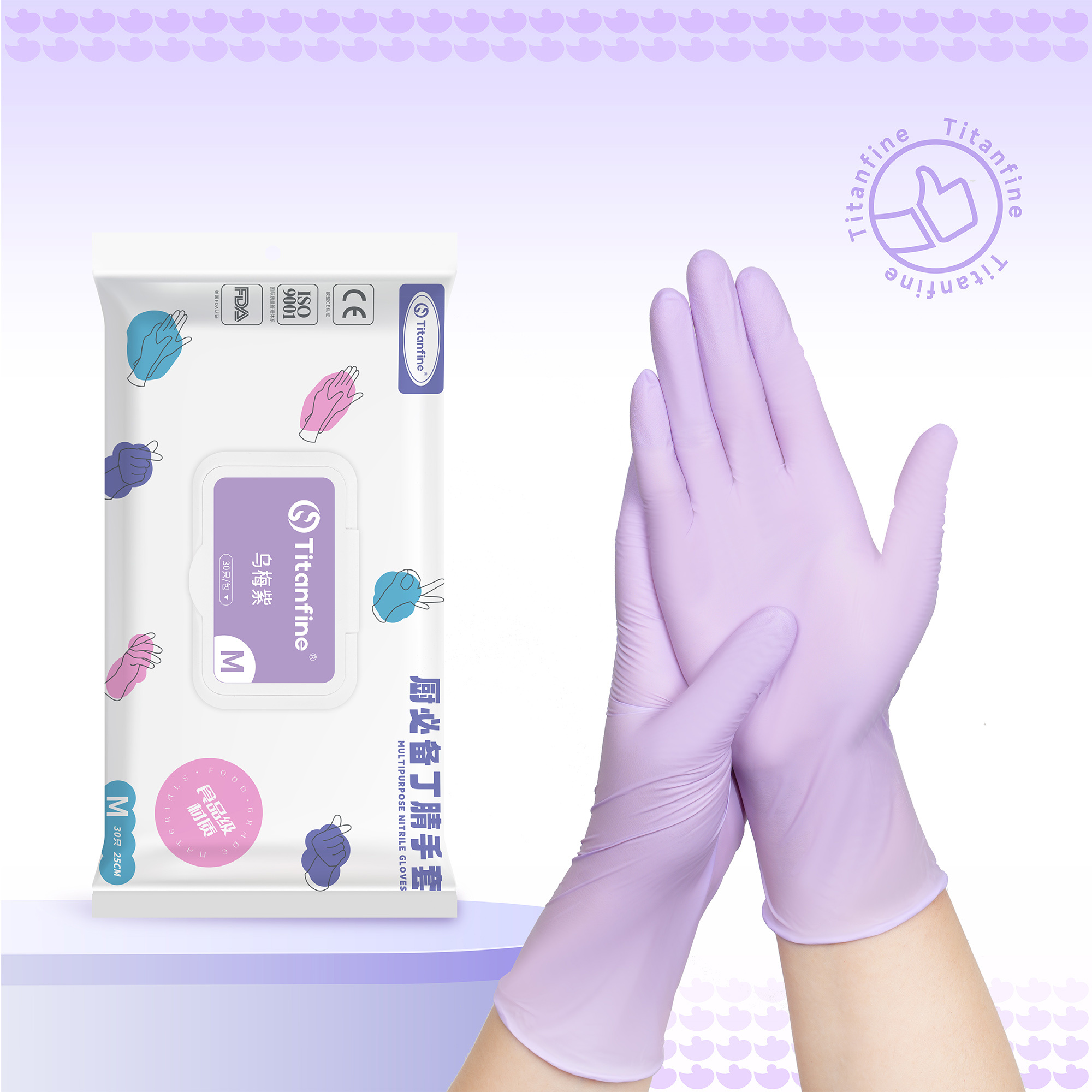
Many people assume that disposable gloves are stuffy and uncomfortable, but today’s nitrile-glove technology has advanced significantly. Take, for example, the Wumei Purple Nitrile Gloves from the domestic brand Titanfine: these gloves are made from high-quality nitrile latex, offering a soft, breathable feel and a more stylish look than traditional latex gloves. They even appeared as the “star-approved” choice on the recently popular variety show “The Beautiful Journey of Best Friends,” winning widespread acclaim. If you’re interested, just search for them on an e-commerce platform and give them a try!

III. Changing the Gloves at Home—These Details Matter More Than You Think
Many people choose nitrile gloves based solely on how thick they are, but there are several other details that directly affect how comfortable and convenient they are to use:
1. Lengthening and thickening really aren’t a waste of money.
Standard gloves only reach the wrist, so water can easily seep in through the cuff, rendering the gloves essentially useless. In contrast, extended gloves that reach 30 cm in length provide protection for the forearm and keep water from splashing inside, making household chores much more worry-free. The Titanfine Black Plum & Violet Nitrile Gloves are precisely this type—longer and thicker—with a non-slip texture on the palm, ensuring a secure grip on dishes even when your hands are wet, so you don’t have to worry about slipping and breaking them.

2. Only when it’s reusable does it truly offer great value.
Single-use, thin nitrile gloves tear after just one wash, making them even more expensive than latex gloves in the long run. The real money-saver is a style that can be washed and reused on a weekly basis. For example, Titanfine nitrile gloves are thick and durable—perfect for everyday tasks like washing dishes and wiping down tables—and can easily withstand three or four uses before needing replacement. When you factor in the cost, they’re far more economical than buying ordinary latex gloves.

3. Great looks—even doing housework can put you in a good mood!
Back in the day, housekeeping gloves were always either pink or white—barely inspiring at all. But this gentle plum-purple hue is so soothing to look at, and the glove packaging is refreshingly minimalist, too. Placed on the kitchen counter, they hardly seem like chores-related items at all; instead, they feel like a little decorative accent, lifting my mood even as I’m doing the dishes.
Ultimately, people are switching to nitrile gloves not because they think latex gloves are inferior, but because today’s household needs have changed. What we want are gloves that protect against dirt and grease, are safe and hypoallergenic, and are food-safe—and nitrile gloves happen to meet all these requirements.
Popular Products


Popular Events


Wherever you touch
there is Titanfine

Tel: +8617732810663
Email: sales@titans-cn.com
Address: No. 311, Yuhua East Road, High-tech Zone, Shijiazhuang City, Hebei Province
Subscribe To Our Latest News
Wherever you touch
there is Titanfine
Tel: +8617732810663
Email: sales@titans-cn.com
Address: No. 311, Yuhua East Road, High-tech Zone, Shijiazhuang City, Hebei Province
Subscribe To Our Latest News


